ATEC 321 Faeta Model Guide
ATEC 321 Faeta · Model Guide
Overview
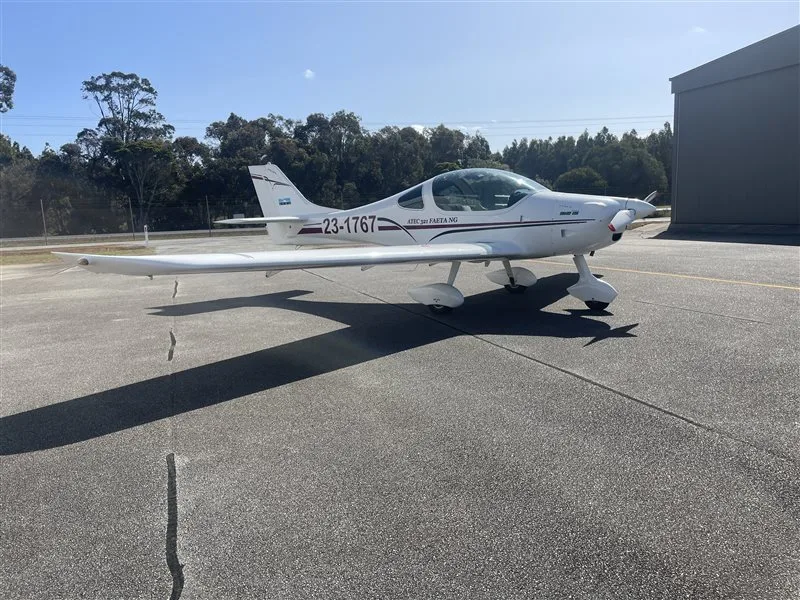
The ATEC 321 Faeta is a two-seat, low-wing ultralight of carbon composite construction. It has fixed tricycle gear, a steerable nosewheel and a tractor Rotax 912-series engine with a FITI propeller. It is built by ATEC v.o.s. in the Czech Republic. The manuals cover the original Faeta at 450 kg MTOW and the Faeta NG with the Rotax 912 iS at 600 kg MTOW. Check which variant you are looking at.
- The ATEC 321 Faeta is a two-seat carbon composite ultralight with fixed tricycle gear and a 5 kg luggage limit.
- The original Faeta has a 450 kg MTOW with a Rotax 912 UL (80 hp) or ULS (100 hp). The NG has a Rotax 912 iS and a 600 kg MTOW.
- Never-exceed speed in the UL manual is 146 kt, with maneuvering speed 85 kt. Flap-extended limits are 70, 65 and 59 kt.
- Mandatory bulletin SB01/2016 covers airbox and hot-air hose checks on aircraft with a non-original airbox.
Summary written by AI from the source document. Check the original before relying on it. See which parts of Sprinkle are written by AI.
Reference only, not for flight. Use the current approved manual for your aircraft. See terms, section 5.
Document
Source
Copy found at sprinkle.com. Sprinkle hosts a reference copy with an added summary, specifications and searchable full text.
Document details
- Type ·
- Model Guide
- Year ·
- 2026
- File size ·
- 49 KB
- Copy found at ·
- sprinkle.com
Specifications & performance
Extracted from this document.
Specifications
- Ng takeoff power (hp) ·
- 100
- Max luggage weight kg ·
- 5
- Ul base engine power (hp) ·
- 80
- Ul uls takeoff power (hp) ·
- 100
- Ng max takeoff weight kg ·
- 600
- Ul max takeoff weight kg ·
- 450
- Max takeoff engine speed rpm ·
- 5,800
- Max continuous engine speed rpm ·
- 5,500
Performance
- Liftoff speed kmh ·
- 75
- Climb speed vx kmh ·
- 110
- Rotation speed kmh ·
- 70
- Aerotow max glider weight kg ·
- 750
V-speeds
- VA_KT ·
- 85
- VC_KT ·
- 123
- VNE_KT ·
- 146
- VRA_KT ·
- 122
- FLAPS_I_MAX_SPEED_KT ·
- 70
- FLAPS_II_MAX_SPEED_KT ·
- 65
- FLAPS_III_MAX_SPEED_KT ·
- 59
Weight & balance
- Max luggage weight kg ·
- 5
- Ng max takeoff weight kg ·
- 600
- Ul max takeoff weight kg ·
- 450
How many people does the ATEC 321 Faeta carry?
The ATEC 321 Faeta is a two-seater. The luggage compartment is limited to 5 kg. The original model has a 450 kg MTOW, and the NG manual states 600 kg.
What engines are fitted?
The ATEC 321 Faeta lists the Rotax 912 UL (80 hp) or 912 ULS (100 hp). The Faeta NG uses the Rotax 912 iS Sport at 100 hp. All of them are non-certified engines.
Is there a known service issue?
Yes. Bulletin SB01/2016 applies to ATEC 321 Faeta aircraft with a non-original airbox and hot-air hose. The hose may contain a filter that can come loose and cause engine failure. Inspect it and log the check.
Can it tow gliders?
Yes. The ATEC 321 Faeta UL has an aerotow amendment: one pilot aboard, MTOW 450 kg, and gliders up to 750 kg. Tested types include the L 13 Blaník and the Duo Discus.
What is the ATEC 321 Faeta Model Guide?
The ATEC 321 Faeta Model Guide is a model guide for the ATEC 321 Faeta, dated 2026.
What year was the ATEC 321 Faeta Model Guide published?
The ATEC 321 Faeta Model Guide — the ATEC 321 Faeta model guide on file — is dated 2026.
Common. More common than 66% of the aircraft models we track.
Most owners only have the POH. Here's the essential set for the ATEC 321 Faeta.
- Pilot's Operating Handbook / AFM
- Checklist
- Maintenance Manual
- Parts Catalog (IPC)
- Systems & Wiring
- Service Bulletins on file
- Type Certificate (TCDS)
ATEC 321 Faeta for sale now
Free — save the 321 Faeta NG to your watchlist and track it in one place.
More ATEC 321 Faetamanuals & documents
- ATEC 321 Faeta PH-4C7Checklist
- Flight and Operations Manual of ATEC 321 Faeta NG aircraft with Rotax 912 iSPilot's Operating Handbook
- Flight and Operations Manual of ATEC 321 Faeta ultralight aircraft with Rotax 912 UL/ULSPilot's Operating Handbook
- Flight and Operations Manual of ATEC 321 Faeta UL aircraftPilot's Operating Handbook
- Amendment to Flight and Operations Manual of ATEC 321 Faeta UL aircraft - AerotowPilot's Operating Handbook
- ATEC 321 FAETA NG – tailplanes assembly and disassemblyMaintenance Manual
- Aircraft assembly and disassemblyMaintenance Manual
Related documents
- Flight and Operations Manual of ATEC 321 Faeta UL aircraftATEC 321 Faeta · Pilot's Operating Handbook
- AEROPRAKT LTD A-22 LS Model GuideAEROPRAKT LTD A-22 LS · Model Guide
- ATEC 122 Zephyr Model GuideATEC 122 Zephyr · Model Guide
- TECNAM P2008 JC Model GuideTECNAM P2008 JC · Model Guide
- Aeropilot Legend 600 Model GuideAeropilot Legend 600 · Model Guide
If you fly the ATEC 321 Faeta, you may also be researching these.
In this document
Variants and engines
The original Faeta lists the Rotax 912 UL (80 hp) or 912 ULS (100 hp), with a 450 kg MTOW. The NG lists the Rotax 912 iS Sport at 100 hp and an MTOW of 600 kg. Fuel is MOGAS: min RON 90 for the 912 UL, RON 95 for the ULS, and RON 95/97 with max 10% ethanol for the NG. The engines are not certified aviation engines. Propellers are 2- or 3-blade FITI.
What to inspect
Read SB01/2016. It was issued after an accident in Norway and applies to aircraft with a non-original airbox. A filter inside the hot-air hose, held by fine wires, can come loose and be drawn into the airbox or carburettor. ATEC requires the hose to be removed and checked before the next flight, and the check logged. Also confirm the type certificate, the log books and the rescue system fitted (USH 52 S or USH 600 are listed).
Handling and assembly notes
The FlightLevel checklist for a Faeta gives rotation at 70 km/h, lift-off at 75 km/h, climb Vx 110 km/h, cruise 120-230 km/h, final 90 km/h and touchdown 70 km/h. Assembly and disassembly need at least two people. Locking nuts and split pins must be replaced on each reassembly, and gel-coat can crack if surfaces are pushed hard.
Summary written by AI from the source document. Check the original before relying on it. See which parts of Sprinkle are written by AI.
Safety notes
- Rotax 912 engines are not certified aviation engines; the manuals say failure can occur at any time. Plan altitude and track to allow a safe landing.
- Per the manual, the aircraft is operated at the user's own risk and is not subject to CAA authorisation.
- Aerotow: single pilot only, maximum takeoff weight 450 kg, towed glider max 750 kg. Landing with the rope attached is prohibited except in emergencies.
Summary written by AI from the source document. Check the original before relying on it. See which parts of Sprinkle are written by AI.
Full document text
ATEC 321 Faeta Model Guide The ATEC 321 Faeta is a two-seat, low-wing ultralight of carbon composite construction. It has fixed tricycle gear, a steerable nosewheel and a tractor Rotax 912-series engine with a FITI propeller. It is built by ATEC v.o.s. in the Czech Republic. The manuals cover the original Faeta at 450 kg MTOW and the Faeta NG with the Rotax 912 iS at 600 kg MTOW. Check which variant you are looking at. • The ATEC 321 Faeta is a two-seat carbon composite ultralight with fixed tricycle gear and a 5 kg luggage limit. • The original Faeta has a 450 kg MTOW with a Rotax 912 UL (80 hp) or ULS (100 hp). The NG has a Rotax 912 iS and a 600 kg MTOW. • Never-exceed speed in the UL manual is 146 kt, with maneuvering speed 85 kt. Flap-extended limits are 70, 65 and 59 kt. • Mandatory bulletin SB01/2016 covers airbox and hot-air hose checks on aircraft with a non-original airbox. Variants and engines The original Faeta lists the Rotax 912 UL (80 hp) or 912 ULS (100 hp), with a 450 kg MTOW. The NG lists the Rotax 912 iS Sport at 100 hp and an MTOW of 600 kg. Fuel is MOGAS: min RON 90 for the 912 UL, RON 95 for the ULS, and RON 95/97 with max 10% ethanol for the NG. The engines are not certified aviation engines. Propellers are 2- or 3-blade FITI. What to inspect Read SB01/2016. It was issued after an accident in Norway and applies to aircraft with a non-original airbox. A filter inside the hot-air hose, held by fine wires, can come loose and be drawn into the airbox or carburettor. ATEC requires the hose to be removed and checked before the next flight, and the check logged. Also confirm the type certificate, the log books and the rescue system fitted (USH 52 S or USH 600 are listed). Handling and assembly notes The FlightLevel checklist for a Faeta gives rotation at 70 km/h, lift-off at 75 km/h, climb Vx 110 km/h, cruise 120-230 km/h, final 90 km/h and touchdown 70 km/h. Assembly and disassembly need at least two people. Locking nuts and split pins must be replaced on each reassembly, and gel-coat can crack if surfaces are pushed hard. Safety notes: • Rotax 912 engines are not certified aviation engines; the manuals say failure can occur at any time. Plan altitude and track to allow a safe landing. • Per the manual, the aircraft is operated at the user's own risk and is not subject to CAA authorisation. • Aerotow: single pilot only, maximum takeoff weight 450 kg, towed glider max 750 kg. Landing with the rope attached is prohibited except in emergencies.