LOCKHEED C-130 Hercules Model Guide
LOCKHEED C-130 Hercules · Model Guide
Overview
The LOCKHEED C-130 Hercules is a turboprop transport family. The registry lists variants including C-130A and C-130B, with family maxima of up to 135 passengers, 3890 nm range and 70300 kg MTOW. The documents are a USCG flight manual and a Lockheed Martin fuel-system service bulletin. Neither gives a variant-specific performance table.
- Registry data (family maxima only) shows a turboprop with up to 135 passengers, 3890 nm range and a 33000 ft service ceiling.
- The USCG flight manual CGTO 1C-130-1 is dated 15 December 2000, Change 1 dated 1 July 2001. Its performance data is in T.O. 1C-130H-1-1.
- Service Bulletin 82-770 / 382-28-19 Rev 4 requires fuel-system bonding and wiring inspections, about 952 man-hours per aircraft.
- Check records for compliance with that bulletin and for the status of operational supplements.
Summary written by AI from the source document. Check the original before relying on it. See which parts of Sprinkle are written by AI.
Reference only, not for flight. Use the current approved manual for your aircraft. See terms, section 5.
Document
Source
Copy found at sprinkle.com. Sprinkle hosts a reference copy with an added summary, specifications and searchable full text.
Document details
- Type ·
- Model Guide
- Year ·
- 2026
- File size ·
- 48 KB
- Copy found at ·
- sprinkle.com
Specifications & performance
Extracted from this document.
Performance
- Max range (nm) ·
- 3,890
- Max cruise speed (kt) ·
- 300
- Max service ceiling (ft) ·
- 33,000
What kind of aircraft is the LOCKHEED C-130 Hercules?
The registry classes the LOCKHEED C-130 Hercules family as turboprop. Listed variants include C-130A and C-130B. The library category 'single-engine-piston' conflicts with this and should not be relied on.
What are the family-level performance maxima?
For the LOCKHEED C-130 Hercules family, the registry shows up to 3890 nm range, 300 kt cruise speed, 33000 ft service ceiling, 70300 kg MTOW and 135 passengers. These are maxima across variants, not figures for one aircraft.
Where is performance data for a specific aircraft?
The USCG flight manual for the LOCKHEED C-130 Hercules refers to T.O. 1C-130H-1-1 for performance data on aircraft with T-56-A-15 engines. That document was not among the inputs.
How big is the fuel-system inspection job?
For the LOCKHEED C-130 Hercules, Service Bulletin Revision 4 estimates about 952 man-hours with a crew of 4, and about 238 hours elapsed. Lockheed Martin says these estimates have not been validated.
What is the LOCKHEED C-130 Hercules Model Guide?
The LOCKHEED C-130 Hercules Model Guide is a model guide for the LOCKHEED C-130 Hercules, dated 2026.
What year was the LOCKHEED C-130 Hercules Model Guide published?
The LOCKHEED C-130 Hercules Model Guide — the LOCKHEED C-130 Hercules model guide on file — is dated 2026.
Common. More common than 97% of the aircraft models we track.
Most owners only have the POH. Here's the essential set for the LOCKHEED C-130 Hercules.
- Pilot's Operating Handbook / AFM
- Checklist
- Maintenance Manual
- Parts Catalog (IPC)
- Systems & Wiring
- Service Bulletins on file
- Type Certificate (TCDS)
Free — save the C-130 to your watchlist and track it in one place.
More LOCKHEED C-130 Herculesmanuals & documents
Related documents
- LOCKHEED C-130 Hercules C-130H Model GuideLOCKHEED C-130 Hercules C-130H · Model Guide
- C-130H Flight ManualLOCKHEED C-130 Hercules C-130H · Flight Manual Supplement
- Flight Design CTLS Model GuideFlight Design CTLS · Model Guide
- BEECHCRAFT KING AIR C90GTI Model GuideBEECHCRAFT KING AIR C90GTI · Model Guide
- BEECHCRAFT KING AIR B200 Model GuideBEECHCRAFT KING AIR B200 · Model Guide
If you fly the LOCKHEED C-130 Hercules, you may also be researching these.
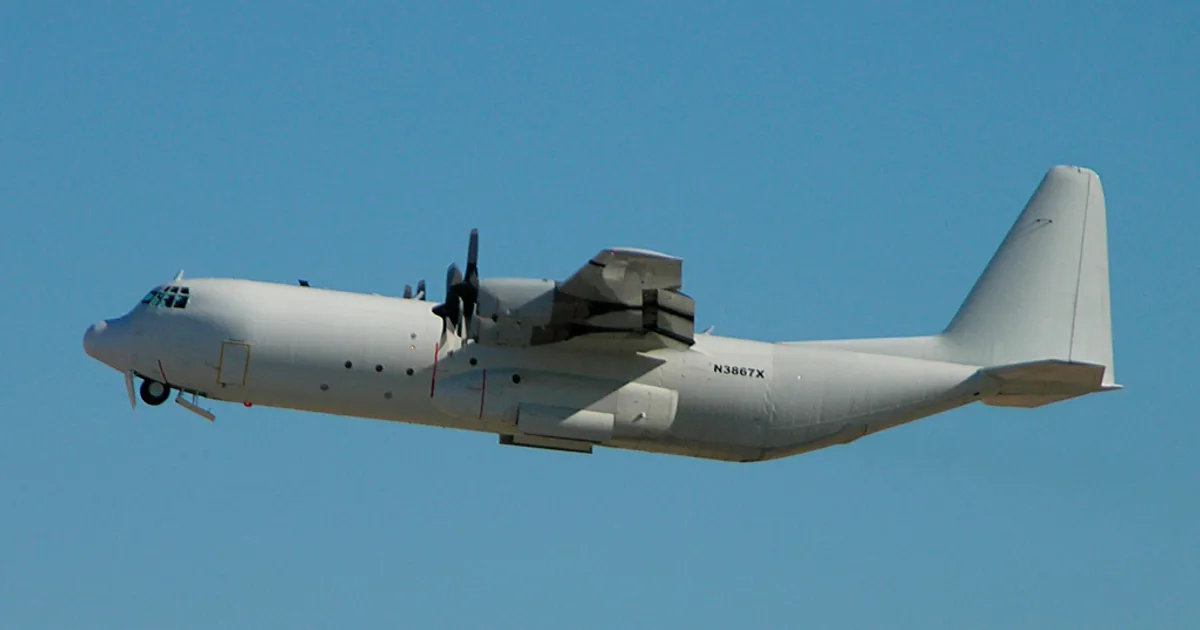



In this document
What the documents cover
The flight manual covers systems, normal and emergency procedures, crew duties and operating limitations for USCG-series C-130 aircraft. Performance figures are not in it: it points to T.O. 1C-130H-1-1 for aircraft with T-56-A-15 engines. The library row's 'single-engine-piston' category conflicts with the registry's turboprop class, so treat it as a data error.
Fuel system service bulletin
Service Bulletin 82-770 / 382-28-19, Revision 4 (18 September 2008), calls for visual and electrical inspection of fuel-tank bonding jumpers, pumps, Fuel Level Control Valve conduits and quantity-indicating wiring. Lockheed Martin estimates about 952 man-hours (crew of 4) and about 238 hours out of service per aircraft. It recommends compliance at next heavy maintenance, no later than 1 year after receipt.
What to check before buying
Ask for log entries showing compliance with the fuel bulletin; previously modified aircraft should be re-inspected. Bond resistance limits: fuel pump 0.37 milliohms, FLCV 1.86 milliohms, access panels 0.37 milliohms, fuel lines 1.00 ohm. Also confirm manual and supplement status, including the Electrical System Upgrade supplement, which stays active until all planes are modified.
Summary written by AI from the source document. Check the original before relying on it. See which parts of Sprinkle are written by AI.
Safety notes
- The bulletin cites a fire in a No. 2 main fuel tank, traced to a pump that was likely not electrically bonded and was not the correct part number.
- Tank entry needs purging to a fire-safe 20 percent lower explosion limit, with full-face respirators worn until the area is purged to 19.5 percent oxygen.
- Do not air-purge tanks if an electrical storm or wind above 15 knots is forecast.
Summary written by AI from the source document. Check the original before relying on it. See which parts of Sprinkle are written by AI.
Full document text
LOCKHEED C-130 Hercules Model Guide The LOCKHEED C-130 Hercules is a turboprop transport family. The registry lists variants including C-130A and C-130B, with family maxima of up to 135 passengers, 3890 nm range and 70300 kg MTOW. The documents are a USCG flight manual and a Lockheed Martin fuel-system service bulletin. Neither gives a variant-specific performance table. • Registry data (family maxima only) shows a turboprop with up to 135 passengers, 3890 nm range and a 33000 ft service ceiling. • The USCG flight manual CGTO 1C-130-1 is dated 15 December 2000, Change 1 dated 1 July 2001. Its performance data is in T.O. 1C-130H-1-1. • Service Bulletin 82-770 / 382-28-19 Rev 4 requires fuel-system bonding and wiring inspections, about 952 man-hours per aircraft. • Check records for compliance with that bulletin and for the status of operational supplements. What the documents cover The flight manual covers systems, normal and emergency procedures, crew duties and operating limitations for USCG-series C-130 aircraft. Performance figures are not in it: it points to T.O. 1C-130H-1-1 for aircraft with T-56-A-15 engines. The library row's 'single-engine-piston' category conflicts with the registry's turboprop class, so treat it as a data error. Fuel system service bulletin Service Bulletin 82-770 / 382-28-19, Revision 4 (18 September 2008), calls for visual and electrical inspection of fuel-tank bonding jumpers, pumps, Fuel Level Control Valve conduits and quantity-indicating wiring. Lockheed Martin estimates about 952 man-hours (crew of 4) and about 238 hours out of service per aircraft. It recommends compliance at next heavy maintenance, no later than 1 year after receipt. What to check before buying Ask for log entries showing compliance with the fuel bulletin; previously modified aircraft should be re-inspected. Bond resistance limits: fuel pump 0.37 milliohms, FLCV 1.86 milliohms, access panels 0.37 milliohms, fuel lines 1.00 ohm. Also confirm manual and supplement status, including the Electrical System Upgrade supplement, which stays active until all planes are modified. Safety notes: • The bulletin cites a fire in a No. 2 main fuel tank, traced to a pump that was likely not electrically bonded and was not the correct part number. • Tank entry needs purging to a fire-safe 20 percent lower explosion limit, with full-face respirators worn until the area is purged to 19.5 percent oxygen. • Do not air-purge tanks if an electrical storm or wind above 15 knots is forecast.